
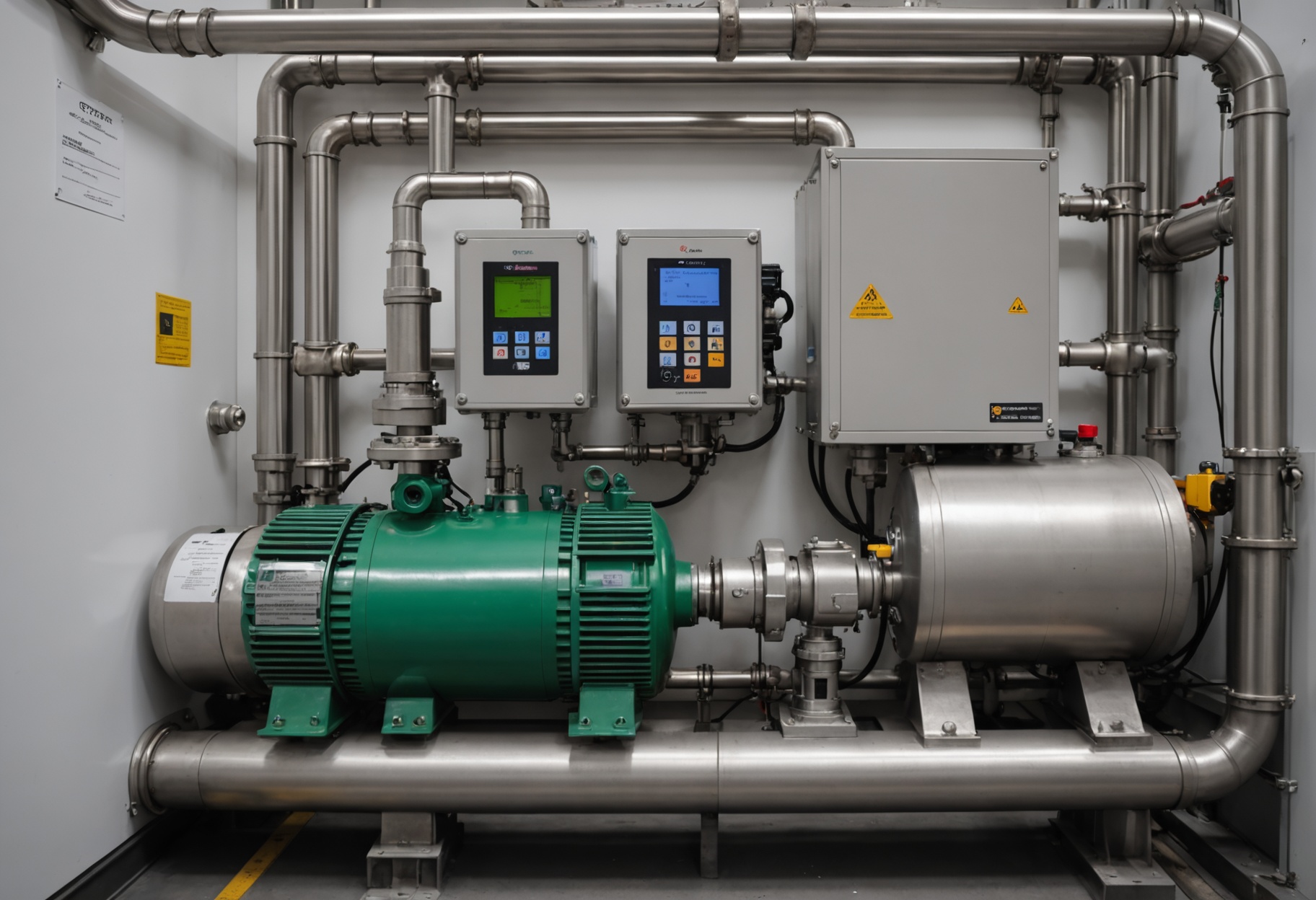
Zone 1 classification means an explosive atmosphere is likely to occur in normal operation. Every piece of electrical equipment installed in that zone — including wireless sensors and IIoT gateways — requires IECEx or ATEX approval. Most IIoT vendors stop at Zone 2 (explosive atmosphere occasional, not normal) because Zone 1 certification adds 9–18 months and $80,000–$150,000 in testing costs to the product development process. For chemical plant maintenance teams, this creates a real constraint on which condition monitoring products are available.
ATEX Zone Classifications and What They Mean for Hardware
The ATEX zone classification system divides hazardous areas into three zones based on the likelihood and duration of an explosive atmosphere. Zone 0 is where an explosive atmosphere exists continuously or for long periods — typically inside storage tanks and process vessels. Zone 1 is where an explosive atmosphere occurs occasionally under normal operating conditions — most process plant compressor rooms, chemical mixing areas, and areas around pump seals carrying volatile hydrocarbons. Zone 2 is where an explosive atmosphere occurs infrequently and briefly — the periphery of Zone 1 areas and areas where leaks are possible but controlled.
The protection concept required for each zone is defined in the IEC 60079 series. Zone 1 typically requires Ex d (flameproof enclosure), Ex e (increased safety), Ex ia (intrinsic safety with two faults allowed), or Ex n (non-sparking) protection. Zone 2 accepts the less restrictive Ex nA (non-sparking) protection, which is significantly easier to achieve. The specific protection concept determines what the hardware can and cannot contain — an Ex ia intrinsically safe sensor has strict limits on stored energy that constrain battery capacity, radio transmit power, and compute capability.
Intrinsic Safety and What It Limits
Intrinsic safety (Ex ia) is the most common protection concept for IIoT sensors in Zone 1 because it does not require a heavy explosion-proof enclosure — the circuit is designed so that it cannot produce a spark or thermal event even under fault conditions. The trade-off is that intrinsic safety imposes strict limits on circuit energy: maximum voltage, current, inductance, and capacitance values are specified in the certification. These limits constrain battery capacity (typically under 1.5 Wh for Zone 1 Ex ia), radio transmit power (limiting wireless range), and onboard processing capability (power-hungry processors are difficult to certify Ex ia).
For condition monitoring sensors that need to sample vibration at 25.6 kHz, process the signal onboard, and transmit results wirelessly, Ex ia certification requires careful power budget management. Our ER-200Z (the Zone 1 variant of the ER-200 sensor node) uses a low-power ARM Cortex-M4 processor that performs decimation and envelope analysis onboard, transmitting only the processed spectral features rather than raw waveform data. This reduces wireless transmission energy by approximately 96% compared to transmitting raw waveforms, which is essential for staying within Ex ia energy limits while maintaining 25.6 kHz sampling capability.
The Zone 1 Gateway: Flameproof vs. Non-Zone-1 Location
The edge gateway — which runs the variational autoencoder inference and generates CMMS alerts — is more computationally demanding than the sensor node. Running ML inference at 50ms cycles on a battery-powered Ex ia device is currently not practical. The common deployment architecture for Zone 1 sites places the edge gateway outside the hazardous area, connected to the Zone 1 sensor nodes via a Zener barrier or galvanic isolator that maintains the intrinsic safety loop boundary.
The gateway can also be installed in an Ex d (flameproof) enclosure within the Zone 1 area if the cabling distance to a safe-area mounting location is impractical. Ex d enclosures are certified by containing any internal explosion rather than preventing ignition, so the internal electronics have no Ex ia energy restrictions — the gateway hardware is identical to the standard ER-200 gateway. The Ex d enclosure itself requires stainless steel construction, flame path clearances per IEC 60079-1, and conduit entry fittings rated for the zone. These enclosures are heavy (8–15 kg for a gateway-sized unit) and require permit-to-work procedures for any maintenance access, which affects the maintenance burden on the monitoring system itself.
Wireless Protocols in Hazardous Areas
Wi-Fi and standard ISM band radios are generally acceptable in Zone 1 when the radio module carries appropriate Ex approval — the radio signal itself is not an ignition source. WirelessHART (IEC 62591) is the most widely specified wireless protocol for process plant instruments because it is explicitly designed for industrial process environments, uses a mesh network architecture that improves reliability in complex plant structures, and has an established history of regulatory acceptance in hazardous area applications. ISA100.11a is an alternative with similar characteristics.
EdgeRun's Zone 1 sensor nodes use a WirelessHART-compatible radio module with Ex ia certification. The WirelessHART mesh operates at 2.4 GHz and uses frequency hopping to avoid interference from other wireless systems. For plants that already have a WirelessHART network infrastructure (many process plants do, for temperature and pressure transmitters), the EdgeRun sensor nodes can join the existing network. For plants without existing wireless infrastructure, the EdgeRun gateway includes a WirelessHART access point that creates an independent mesh.
Installation Permitting and Hot Work Considerations
Installing new electrical equipment in Zone 1 areas requires a hot work permit at most process facilities, even if the installation itself doesn't involve cutting or welding. The permitting process involves confirming the area classification, verifying the equipment ATEX/IECEx certificate numbers, confirming the temperature class is appropriate for the process chemicals present, and obtaining a gas test clearance for the work period. At facilities with active process operations, the permitting delay for Zone 1 work often adds one to three weeks to the installation timeline compared to Zone 2 or non-hazardous area work.
The EdgeRun ER-200Z sensor nodes use a magnetic mounting base as the standard attachment method, avoiding the need to drill or weld mounting hardware onto the equipment. This qualifies the installation as "non-intrusive" at most facilities, which simplifies the permitting process compared to installations that require mechanical modification of the process equipment. The magnetic mount generates sufficient clamping force for vibration measurement on equipment operating at up to 150°C surface temperature.
Temperature Class Selection for Process Chemicals
ATEX temperature class (T1 through T6) defines the maximum surface temperature of the equipment, which must be below the ignition temperature of the process chemicals present. T4 (maximum surface temperature 135°C) is the most common specification for general hydrocarbon processing environments. For processes involving low-ignition-temperature chemicals — diethyl ether (160°C ignition temperature), carbon disulfide (90°C ignition temperature) — T5 or T6 classification may be required. Selecting a sensor with an insufficient temperature class is a certification violation that invalidates the equipment's ATEX approval in that location.
The ER-200Z carries T4 classification by default. For applications requiring T5 or T6, we work with the customer's process safety engineer to confirm the applicable temperature class before equipment selection. This is a required step in the hazardous area equipment selection process — it is not optional, and it cannot be retroactively addressed after installation.
Monitoring equipment in a hazardous area?
Talk to us about Zone 1 ATEX deployments. We can review your area classification documentation and confirm product suitability.
Request a Demo